How to Import from China to Tanzania: TRA, TBS, Duties and VAT
To import from China to Tanzania, register your business with the Tanzania Revenue Authority (TRA), check whether your product needs a Tanzania Bureau of Standards (TBS) Certificate of Conformity before it ships, and appoint a licensed clearing and forwarding agent to lodge your declaration in TANCIS. You then pay import duty under the EAC Common External Tariff, 18% VAT (Mainland) and other charges before the goods are released.
- Clearance is done online in TANCIS through a licensed clearing and forwarding agent. TRA advises lodging the declaration at least 7 days before the vessel arrives.
- Import duty follows the EAC Common External Tariff (bands of 0%, 10%, 25% and 35%, with some sensitive items higher). VAT on imports is 18% for Mainland Tanzania and 15% for Zanzibar.
- Goods covered by the TBS PVoC programme need a Certificate of Conformity before shipment, or they may be rejected or fined at Tanzanian ports.
Step 1: Register your business with TRA
TRA says a person who starts carrying on a business must apply for a Taxpayer Identification Number (TIN) within 15 days of starting. Importing goods for sale is a business, so get your TIN before your first order.
- Apply online with the TIN form on the TRA Taxpayer Portal (taxpayerportal.tra.go.tz).
- Individuals need official ID, such as a National ID, passport or voter ID.
- For a business TIN, TRA asks for a letter from your Local Government Authority and a lease agreement or title deed for the business location.
- After the TIN certificate, TRA carries out an assessment interview. Your business licence comes after tax clearance.
VAT registration is a separate step. It becomes mandatory when your taxable turnover reaches TZS 200 million in 12 months (or TZS 100 million in 6 months).
Step 2: Check standards and permits before you order
Do this before you pay the supplier. A product that fails Tanzanian requirements can be refused at the port.
TBS Pre-shipment Verification of Conformity (PVoC)
PVoC checks that regulated products meet Tanzanian standards in the exporting country, before they ship. TBS uses accredited agencies for this work. They may review documents, test samples in a laboratory and inspect the factory.
- PVoC-covered goods need a Certificate of Conformity (CoC) together with the customs release documents before they leave China.
- TBS states that goods arriving without the required documents will be rejected or fined.
- TBS publishes the list of regulated HS codes and the contacts of its contracted inspection providers on its import and export control page.
Destination inspection and batch certification
TBS also inspects goods after they arrive. This covers a compulsory list of HS codes, plus PVoC goods that came without a CoC. Under the Standards (Imports Registration and Batch Certification) Regulations, 2021, an imported product may not be sold or released to the market unless TBS has approved and certified it. The importer applies for batch certification within seven days before the consignment arrives.
Under the same 2021 regulations, you must be registered with TBS before you carry on a business of importing pre-packed food or cosmetics into Mainland Tanzania. Your premises must also be registered. The regulations set fines of not less than TZS 50 million, or imprisonment, for offences.
Other agency permits
TRA lists import permits from bodies such as TMDA, TBS and TASAC among the clearance documents. It also advises importers to contact the relevant ministry or agency for approval. Examples TRA names include the Government Chemist Laboratory Agency, the Tanzania Medicines and Medical Devices Authority, the Tanzania Atomic Energy Commission and the Fair Competition Commission.
Step 3: Check prohibited and restricted goods
Tanzania applies the EAC Customs Management Act, 2004. Its Second Schedule lists prohibited imports (Part A) and restricted imports (Part B), which need a permit or must meet set conditions.
| Prohibited (Part A) – examples | Restricted (Part B) – examples |
|---|---|
| Counterfeit goods of all kinds | Arms and ammunition |
| Pornographic or obscene material | Genetically modified products |
| Soaps and cosmetics containing mercury | Ozone-depleting substances |
| Used tyres for light commercial vehicles and passenger cars | Endangered species and their products (CITES) |
| Narcotic drugs under international control | Second-hand commercial tyre casings |
| Hazardous waste | Postal franking machines (written permit) |
The table shows examples only. Any goods restricted under other Tanzanian law are also restricted, so check your product with the agency concerned.
Step 4: Know the duties and taxes
Duty is charged under the EAC Common External Tariff (CET). TRA publishes the tariff on its import procedures page. Find your product's HS code first, because the rate depends on it. Our guide to HS codes for products from China explains how.
| Charge | Rate (official source) |
|---|---|
| Import duty, CET band 1 | 0% – raw materials and capital goods |
| Import duty, CET band 2 | 10% – intermediate or semi-finished goods |
| Import duty, CET band 3 | 25% |
| Import duty, CET 4th band | 35% – finished products in listed sectors, such as furniture, textiles and garments, ceramic products and paints |
| Sensitive items | Above 35% (CET Schedule 2) |
| VAT on imports | 18% Mainland Tanzania; 15% Zanzibar |
| Railway Development Levy | 2% of customs value (Mainland, home consumption) |
| Customs processing fee | 0.6% of FOB value |
| Excise duty (selected goods) | For example, 25% on imported used domestic or electric appliances, used spare parts and furniture |
Some goods also attract an Industrial Development Levy on the customs value. TRA's 2025/26 guide lists examples such as cement and furniture at 10%. Port and airport charges apply on top.
With a Pre-Arrival Declaration, your agent can start clearance before the goods arrive. TRA says this shows the importer the duties and taxes payable in advance. It does not apply to post parcels and courier imports.
Step 5: Ship and clear through TANCIS
TANCIS (Tanzania Customs Integrated System) is TRA's web-based, paperless clearance system. You do not lodge the declaration yourself. You appoint a licensed clearing and forwarding agent.
- Confirm your HS code, permits and any PVoC Certificate of Conformity.
- Ship the goods from China. Main entry points include Dar es Salaam Port, Julius Nyerere International Airport and Kilimanjaro International Airport.
- Give your agent the documents: final invoice, packing list, bill of lading or airway bill, an authorisation letter, import permits and any exemption documents.
- The agent lodges the declaration in TANCIS at least 7 days before the vessel arrives. TANCIS rejects incomplete declarations or ones with poor descriptions.
- Pay duties and taxes using the control number, through a commercial bank, mobile money or the Government Electronic Payment Gateway (GEPG).
- Complete any TBS destination inspection or batch certification, then collect your goods.
Kenya uses the same EAC tariff and customs law. If you sell in both markets, see our guide to importing from China to Kenya.
How Aoyama Sourcing can help
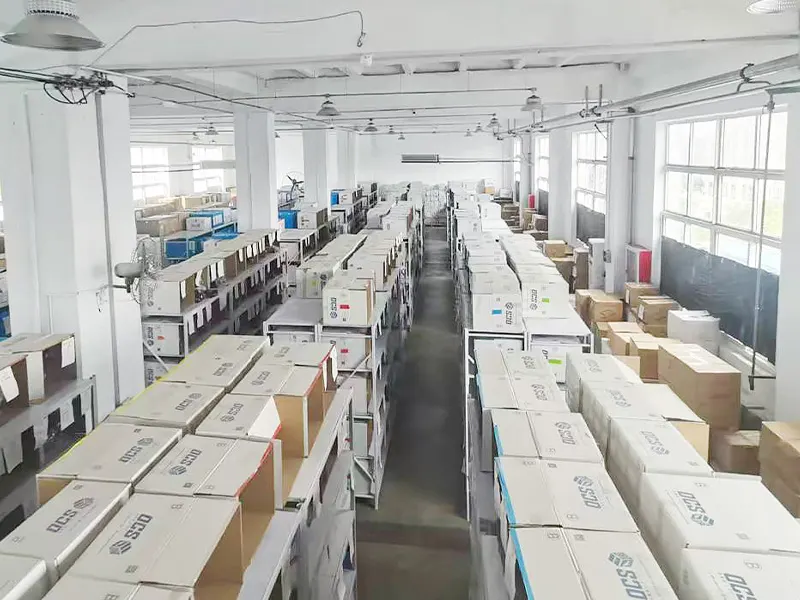
Aoyama Sourcing is a sourcing agent with its own warehouse of about 1,000 m² in Qingdao, China. We have operated since September 2016. We ship to Africa, such as Nigeria, South Africa, Kenya, Ghana and Egypt. The shipping method, days and cost are given in your quote.
- Service fee: 5% of the product price plus China domestic shipping, with a minimum of ¥3,000 per order. The fee falls to 4% for orders of ¥500,000 or more and 3% for ¥1,000,000 or more. See our pricing.
- Customers outside Japan pay a 4% international transaction fee, whatever the payment method.
- Pay by international bank transfer or card (Visa, Mastercard or AMEX via a payment link).
- No membership or monthly fee. Quotes are free, and a quote does not create an order.
- Support in English, Chinese and Japanese.
- We do not buy counterfeit or unauthorised products.
To plan a shipment from several suppliers, read consolidated shipping from China, then request a free quote or contact us.
Frequently asked questions
What is the VAT rate on goods imported into Tanzania?
TRA lists VAT on imports at 18% for Mainland Tanzania and 15% for Zanzibar.
Do all goods from China need a TBS Certificate of Conformity?
No. Only goods covered by the TBS PVoC programme need a Certificate of Conformity before shipment. TBS publishes the list of regulated HS codes. Other goods may still face destination inspection or batch certification after arrival.
Can I clear goods through TANCIS myself?
TRA's import procedure is for the importer to appoint a licensed clearing and forwarding agent, who lodges the declaration in TANCIS with the supporting documents.
Summary
- Get a TRA TIN, then check TBS PVoC, batch certification and other agency permits before you order.
- Duty follows the EAC CET bands of 0%, 10%, 25% and 35%, plus 18% VAT (Mainland), a 2% Railway Development Levy and a 0.6% customs processing fee.
- A licensed agent lodges your declaration in TANCIS at least 7 days before the vessel arrives.
Sources: TRA – Import Procedures, TRA – Trading across borders, TRA – Pre-Arrival Declaration, TRA – TANCIS FAQ, TRA – Value Added Tax, TRA – Taxes and Duties at a Glance 2025/2026, TRA – Starting Business, TBS – Imports and Export Control, TBS – Imports Registration and Batch Certification Regulations, 2021, EAC – Customs Union at 25, EAC – 35% CET 4th Band, EAC Customs Management Act, 2004 – Second Schedule (KRA publication)
Aoyama Sourcing is a Japan proxy buying and China sourcing agent. Send us product links. We check the seller, buy, inspect and ship to your country. Quotes are free and do not create an order.
Get a free quoteMore guides
 Anime Figures Wholesale from Japan: A Guide for Overseas ShopsOverseas shops can buy anime figures wholesale from Japan via official distribution, a Japanese wholesaler or a buying agent. How to avoid fakes, plan…
 Proforma Invoice From a China Supplier: What to Check Before PayingA proforma invoice from a China supplier is a quote in invoice format. Check the seller and bank account name, spec, price, Incoterms, payment…
 LMPC Certificate for Import: India’s Rule 27 and Label RulesAn LMPC certificate for import is the Rule 27 registration an Indian importer of pre-packaged goods must hold. See who needs it, the Rule…
 Japanese Tableware Wholesale: Where to Buy and What to CheckOverseas businesses can buy Japanese tableware wholesale from makers, wholesalers, B2B catalogues and trade fairs. Check minimum lots, packing and food-contact rules first.


