How to Import from China to Nigeria: Form M, SONCAP and Duties

To import from China to Nigeria, you register your business, open a Form M through an authorised dealer bank, get SONCAP certificates for SON-regulated products and NAFDAC approval for NAFDAC-regulated products, then obtain a Pre-Arrival Assessment Report (PAAR) and pay import duty, VAT and levies at clearance. Check the Nigeria Customs Service import prohibition list first, because some common products from China, such as most footwear and bags, cannot be imported. This guide explains each step using official Nigerian sources.
- Form M is opened electronically and processed by your authorised dealer bank. For SON-regulated goods, the SONCAP Product Certificate is needed to open it.
- SONCAP is a pre-shipment scheme. It cannot be processed after the goods have left China.
- At clearance you pay import duty, VAT of 7.5% (if applicable) and levies such as the CISS levy of 1% of CIF value, through a licensed customs agent.
Step-by-step: importing from China to Nigeria
The Nigerian Trade Information Portal (NTIP), Nigeria's official single-window trade information portal, describes the import process in these steps:
- Register as an importer. Incorporate with the Corporate Affairs Commission (CAC), get a Tax Identification Number (TIN), and open accounts on the National Single Window and the B'odogwu customs platform.
- Check the HS code. Confirm the duty rate, levies and agency requirements for your product.
- Get licences and certificates. Apply through the National Single Window for NAFDAC, SONCAP or NESREA approvals, depending on the goods.
- Obtain a Form M. Apply through an authorised dealer bank on the B'odogwu platform.
- Obtain the PAAR. Apply to the Nigeria Customs Service through B'odogwu.
- Clear customs. Submit the goods declaration and pay duties, VAT and levies. A licensed customs agent is required.
- Examination and release. Goods may be examined or scanned. A release order is issued after compliance checks.
NTIP notes that some steps can run in parallel and that procedures vary by product, so confirm requirements with the relevant agencies.
Check the import prohibition list first
Before you look for a supplier, check whether Nigeria allows the product at all. The Nigeria Customs Service publishes an import prohibition list, also shown on NTIP with HS codes. Entries that matter for buyers from China include:
| Product | What the list says |
|---|---|
| Footwear, bags and suitcases (all types) | Prohibited, excluding safety shoes used in oil industries, sports shoes, canvas shoes, and all completely knocked down (CKD) blanks and parts |
| Soaps and detergents | Prohibited in retail packs only |
| Carpets and other textile floor coverings | Prohibited |
| Used compressors, air conditioners, fridges and freezers | Prohibited |
| Certain common medicines (for example some paracetamol products) | Prohibited |
Each entry covers a range of HS codes and may have exceptions. The list can change, and duties are subject to change. Check the current list on the Nigeria Customs Service website or NTIP before you pay a supplier.
Form M
According to the Nigerian Ports Authority (NPA) import guidelines, the importer opens a Form M electronically on the Nigerian Trade Platform (Single Window system) and submits it to the authorised dealer bank. The bank reviews it and forwards it to customs, which can accept or reject it. Supporting documents include the insurance certificate, the proforma invoice and, when the item is regulated by SON, the Product Certificate.
So get a proforma invoice from your Chinese supplier early. It should show the real product description, quantity and price.
SONCAP for SON-regulated products
SONCAP (Standards Organisation of Nigeria Conformity Assessment Programme) is a pre-shipment verification scheme. Products are checked and tested in the exporting country before shipment. It applies to all SON-regulated products imported into Nigeria.
| Document | What it does |
|---|---|
| Product Certificate (PC) | The first certificate in the process. It is issued to the exporter and is used to open the Form M. PC 1 (unregistered) is valid for one shipment only; PC 2 (registered) and PC 3 (licensed) are valid for one year. |
| Certificate of Conformity (CoC) | Issued after the offshore assessment by one of the accredited firms working for SON |
| SONCAP Certificate (SC) | Issued by SON to the importer. It is used to process the PAAR for clearance at Nigerian ports. |
The SON FAQ says SONCAP cannot be processed after the consignment has left the country of origin. Late applications are treated as default, with a penalty of 20% of CIF value or ₦2 million, whichever is higher. Regulated goods that arrive without SONCAP may be detained, tested or destroyed at the importer's expense.
Some products are outside SONCAP, including food, drugs, chemicals used as raw materials by manufacturers, and used products other than automobiles. Being outside SONCAP does not mean a product is unregulated. SON can also issue a SONCAP Import Permit for certain categories.
NAFDAC for food, cosmetics and other regulated products
NAFDAC regulates and controls the manufacture, importation, exportation, distribution, advertisement, sale and use of food, drugs, cosmetics, medical devices, packaged water, chemicals and detergents. It also inspects imported regulated products. NAFDAC publishes separate guidelines and permits for imports such as industrial and laboratory chemicals.
If your product falls into one of these groups, apply for the NAFDAC approval through the National Single Window before you ship, as NTIP describes.
Duties, VAT and levies
Duty rates depend on the HS code in the CET tariff, which you can download from NTIP. The NTIP duty calculator asks for the HS code, currency, cost price, freight and insurance, and works out the CIF value in naira. It then lists the charges, including:
- Import duty (a percentage of CIF value)
- VAT (7.5%, if applicable, according to the NTIP import procedure)
- ETLS levy (a percentage of CIF value)
- Surcharge (a percentage of the import duty)
- CISS levy (1% of CIF value, according to the NTIP import procedure)
Because duties are subject to change, use the NTIP duty calculator with your own HS code and values before you decide on a product. For help with codes, see how to find the HS code for products from China.
Buying from 1688 and Taobao for Nigeria
Most 1688 and Taobao sellers ship only inside China, so buyers abroad use a purchasing agent. Because SONCAP and Form M must be ready before the goods leave China, decide your products, quantities and prices first, then share the product details with your clearing agent in Nigeria. See how to buy from 1688 from overseas and consolidated shipping from China.
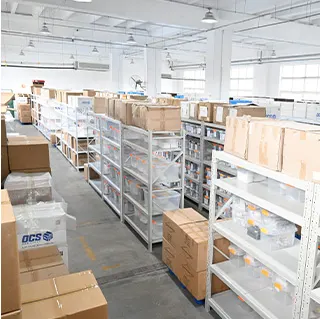
We buy from 1688, Taobao, Tmall, JD.com, Pinduoduo and Xianyu, and receive the goods at our own warehouse in Qingdao (about 1,000 m², established September 2016). We consolidate items from several sellers into one shipment and ship by air and sea. Our destinations include Africa, such as Nigeria, South Africa, Kenya, Ghana and Egypt; shipping is quoted by destination, weight and method. Our service fee is 5% of the product price plus China domestic shipping (minimum ¥3,000 per order; 4% for orders of ¥500,000 or more, 3% for ¥1,000,000 or more). Customers outside Japan pay a 4% international transaction fee. We do not buy counterfeit or unauthorized branded goods. Quotes are free and do not create an order. See pricing, start a quote, or contact us (WhatsApp is available).
Related guides: 1688 vs Taobao vs Alibaba and AQL inspection for products from China.
Frequently asked questions
What is Form M in Nigeria?
Form M is an import document you open electronically and submit through your authorised dealer bank. The bank reviews it and forwards it to customs. For SON-regulated goods, you need the SONCAP Product Certificate to open it.
Can I get SONCAP after the goods arrive in Nigeria?
No. SON says SONCAP cannot be processed after the consignment has left the country of origin. Late applications are penalised at 20% of CIF value or ₦2 million, whichever is higher.
Can I import shoes and bags from China to Nigeria?
Footwear, bags and suitcases of all types are on the import prohibition list, except safety shoes used in oil industries, sports shoes, canvas shoes and CKD blanks and parts. Check the HS code on the current list.
Summary
- Check the import prohibition list and your HS code before you choose a product.
- Arrange Form M, SONCAP and any NAFDAC approval before the goods leave China.
- Clear through a licensed customs agent with the PAAR, and estimate duty, VAT and levies with the NTIP duty calculator.
Sources: NTIP, Import Procedures / NTIP, Prohibited Items (Nigeria Customs Service list) / NTIP, Duty Calculator / Nigerian Ports Authority, Import & Export Guidelines / SON, SONCAP / SON, SONCAP FAQ / NAFDAC, About NAFDAC / NAFDAC, Chemical Imports
Aoyama Sourcing is a Japan proxy buying and China sourcing agent. Send us product links. We check the seller, buy, inspect and ship to your country. Quotes are free and do not create an order.
Get a free quoteMore guides
 How to Buy Japanese Products Wholesale: Channels, Rules and ShippingTo buy Japanese products wholesale, overseas businesses use Japanese B2B wholesale sites, makers and distributors, trade shows or JETRO. Learn export rules, import rules…
 How to Order Samples from China: Costs, Customs and Golden SamplesTo order samples from China, verify suppliers, send a written sample request, agree who pays sample and courier costs, test the samples and keep…
 China OEM Manufacturer: How to Find, Check and Work With OneTo work with a China OEM manufacturer, find and verify factories, approve a sample, sign a clear contract, register your trademark and inspect before…
 How to Pay Chinese Suppliers from Zimbabwe: Options and RBZ RulesTo pay Chinese suppliers from Zimbabwe, use a bank T/T through an Authorised Dealer, Alibaba.com Trade Assurance or a sourcing agent in China. Learn…


