How to Import from China to Ghana: GRA Customs, Duties and Rules

To import from China to Ghana, you need a Taxpayer Identification Number (TIN) or, as an individual, your Ghana Card PIN. A clearing agent then declares the goods to the Ghana Revenue Authority (GRA) in ICUMS, and you pay import duty, VAT and levies before release. Regulated products also need approval from the Ghana Standards Authority (GSA) or the Food and Drugs Authority (FDA).
- GRA says the Ghana Card PIN replaced the GRA TIN for individuals from April 1, 2021. Companies still use their GRA TIN.
- Import duty follows the ECOWAS Common External Tariff bands (0%, 5%, 10%, 20% and 35%). The rate for your product depends on its HS code.
- From January 1, 2026, GRA lists VAT at 15%, with NHIL and GETFund at 2.5% each. The COVID-19 Health Recovery Levy has been abolished.
What you need before the goods arrive
GRA's import procedures page lists the documents needed before or when the goods arrive:
- Original bill of lading or waybill
- Attested invoice
- Packing list
- Import Declaration Form (IDF) from the Ministry of Trade
- TIN from GRA, or your Ghana Card PIN
- Permits from regulatory agencies where your goods need them, such as FDA or GSA
TIN or Ghana Card PIN
GRA says the Ghana Card PIN has replaced the TIN that GRA issued to individual taxpayers, from April 1, 2021. GRA still issues TINs to companies, organisations and other legal persons. A company imports with its own TIN.
You will need a clearing agent
GRA's customs FAQ says that clearance at the ports currently requires the use of clearing agents by law. The agent submits your declaration in ICUMS.
How customs clearance works in ICUMS
ICUMS (Integrated Customs Management System) is Ghana's single-window system for customs documents and payments. It was introduced in June 2020. GRA describes the clearance steps like this:
- The clearing agent submits the declaration in ICUMS with the documents above.
- ICUMS processes it in three stages: classification, valuation and approval.
- After approval, the agent pays duties and taxes at a participating bank, using the tax bill from ICUMS.
- The consignment gets a risk colour. Red means mandatory physical examination. Yellow means a digital scan. Green means release at the gate, with an automatic scan on the way out of the port.
- Released goods go to the exit gate for a security check.
How customs values your goods
GRA says customs duties on general goods are assessed on the CIF value: cost, insurance and freight. Rates are applied according to the Harmonized System (HS) code of the goods. So the price you pay in China, plus insurance and shipping to Ghana, forms the base. A correct HS code matters. See our guide to HS codes for products from China.
Import duty, VAT and levies
Ghana applies the ECOWAS Common External Tariff (CET). GRA and ECOWAS both list five bands:
| Band | Type of goods (as described by GRA) |
|---|---|
| 0% | Essential social goods |
| 5% | Basic necessities, basic raw materials, capital goods and specific inputs |
| 10% | Inputs and intermediate (semi-finished) goods |
| 20% | Finished goods (final consumer goods) |
| 35% | Specific goods for economic development |
Do not guess the band. It depends on the exact HS code. Check the official tariff, or use the General Goods Duty Calculator linked from GRA's customs pages.
VAT, NHIL and GETFund from 2026
The Value Added Tax Act, 2025 (Act 1151) took effect on January 1, 2026. GRA's notice says:
- VAT stays at 15%.
- NHIL and GETFund stay at 2.5% each. GRA says this brings the total effective rate to 20%.
- The COVID-19 Health Recovery Levy has been abolished.
For imports, GRA says VAT is charged on the value for customs duty plus import duties and other taxes that may be chargeable.
GRA's tariffs and levies page also lists import excise duty, examination fee, African Union (AU) levy, ECOWAS levy, processing fee, special import levy, import levy, interest charge and state warehouse rent. Not every charge applies to every shipment. GRA does not publish the rates on that page, so ask your clearing agent or GRA for a full estimate before you order.
GSA rules for regulated products
GSA runs import inspection for High Risk Goods (HRGs). These are goods with serious health, safety or environmental effects. GSA's list includes:
- Electrical appliances, electrical products (bulbs, switches, sockets), cables and electronic products
- Toys, building materials, vehicle spare parts and motor vehicle batteries
- Food, cosmetics, pharmaceuticals, medical devices, chemicals and used goods such as second-hand clothing
GSA says all importers of HRGs must register with GSA and buy the applicable Ghana Standard. The goods should come with a Certificate of Analysis or Certificate of Conformance from a competent laboratory, preferably in the exporting country. Without one, the shipment is held until samples pass testing. Labels must meet the General Labelling Rules, 1992 (L.I. 1541). Labels in a foreign language must be translated into English, or the goods may be impounded.
FDA approval for food, cosmetics and drugs
FDA Ghana regulates food, drugs, cosmetics, medical devices and household chemicals. Its imports page says:
- Register the product before you import it. FDA has declared zero tolerance for unregistered imported products.
- Unregistered regulated products in commercial quantities may be re-exported, confiscated or disposed of.
- FDA issues import permits for regulated products. They are managed on ICUMS and are valid for one year.
Prohibited and restricted goods
GRA lists absolute prohibitions. These include counterfeit coins and notes, indecent or obscene articles, contaminated food, knuckle dusters and dangerous weapons such as flick knives. Other goods need a permit first. For example, arms, explosives, handcuffs and key-duplicating machines need Ministry of Interior approval. Plants and soil need Ministry of Food and Agriculture approval. Gambling machines need Gaming Commission approval. Check the full list before you buy.
GRA says postal articles also attract customs duties. Goods sent by post are examined and assessed at the post office counter. Goods not claimed within three months are confiscated and auctioned.
Practical steps when buying from 1688, Taobao or Alibaba
When you buy from Chinese marketplaces, follow this order of work:
- Check your product first: HS code, CET band, and whether it is a GSA High Risk Good or an FDA-regulated product.
- Get your TIN or Ghana Card PIN ready, and choose a clearing agent in Ghana.
- Choose suppliers. Our guide to 1688 vs Taobao vs Alibaba explains the differences.
- Have the goods sent to a warehouse in China, and inspect them there. See AQL inspection in China.
- Combine orders from several sellers into one shipment. See consolidated shipping from China.
- Make sure the invoice and packing list are accurate. Customs values goods on CIF, so the declared value must be true.
For buying steps on 1688, read how to buy from 1688 from overseas.
How Aoyama Sourcing can help
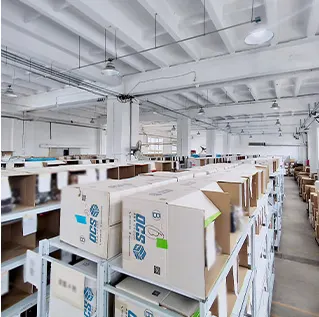
Aoyama Sourcing runs its own warehouse of about 1,000 m² in Qingdao, China. We buy China products for overseas customers and ship to Africa, including Ghana.
- Service fee for China products: 5% of the product price plus China domestic shipping (minimum ¥3,000 per order). It is 4% for orders of ¥500,000 or more, and 3% for ¥1,000,000 or more.
- Customers outside Japan pay a 4% international transaction fee, regardless of payment method.
- Payment by international bank transfer or card (Visa, Mastercard, AMEX) via a payment link.
- No membership or monthly fee. Quotes are free, and a quote does not create an order.
- Support in English, Chinese and Japanese. We do not buy counterfeit or unauthorised products.
The shipping method, delivery days and cost are given in your quote. See our pricing and China sourcing agent fees, then request a free quote or contact us.
Frequently asked questions
Can I import from China to Ghana without a TIN?
GRA lists a TIN or Ghana Card PIN as a requirement. For individuals, the Ghana Card PIN has replaced the GRA TIN since April 1, 2021. Companies use their GRA TIN.
How much import duty will I pay in Ghana?
It depends on the HS code of your product. Ghana uses the ECOWAS CET bands of 0%, 5%, 10%, 20% and 35%, assessed on the CIF value. VAT, NHIL, GETFund and other levies may be added. Use GRA's duty calculator or ask your clearing agent.
Is the COVID-19 levy still charged in 2026?
No. GRA says the COVID-19 Health Recovery Levy was abolished under the VAT Act, 2025 (Act 1151), effective January 1, 2026.
Summary
- Get your TIN or Ghana Card PIN, documents and a clearing agent ready. The agent declares your goods in ICUMS.
- Check the HS code and CET band, and budget for VAT (15%), NHIL (2.5%), GETFund (2.5%) and other levies.
- Check GSA, FDA and GRA prohibition rules before you buy, then inspect and consolidate goods in China before shipping.
Sources: GRA, Import Procedures, GRA, TIN, GRA, Customs FAQ, GRA, ICUMS, GRA, Customs Tariffs and Levies, GRA, Notice to All VAT Registered Taxpayers, GRA, VAT, GRA, VAT on Imports and Exports, GRA, Import Prohibitions and Restrictions, GRA, Importing through the Post Office, ECOWAS, Common External Tariff, GSA, Import Inspection, FDA Ghana, Imports and Exports Control
Aoyama Sourcing is a Japan proxy buying and China sourcing agent. Send us product links. We check the seller, buy, inspect and ship to your country. Quotes are free and do not create an order.
Get a free quoteMore guides
 How to Buy Japanese Products Wholesale: Channels, Rules and ShippingTo buy Japanese products wholesale, overseas businesses use Japanese B2B wholesale sites, makers and distributors, trade shows or JETRO. Learn export rules, import rules…
 How to Order Samples from China: Costs, Customs and Golden SamplesTo order samples from China, verify suppliers, send a written sample request, agree who pays sample and courier costs, test the samples and keep…
 China OEM Manufacturer: How to Find, Check and Work With OneTo work with a China OEM manufacturer, find and verify factories, approve a sample, sign a clear contract, register your trademark and inspect before…
 How to Pay Chinese Suppliers from Zimbabwe: Options and RBZ RulesTo pay Chinese suppliers from Zimbabwe, use a bank T/T through an Authorised Dealer, Alibaba.com Trade Assurance or a sourcing agent in China. Learn…


